
Translating AI news and trends into real implications for talent development leaders.
A very insightful 2-minute read!
Our job is to keep our finger on the pulse of what’s happening with Talent in the Age of AISM.
Here are some little “hits” of what I’ve been reading lately. To read even more and access FREE resources, see TalentintheAgeofAI.com.

Wendy Wiseman
AI is making content abundant.
Anyone can generate copy, slides, images, strategies, product names, campaign ideas and polished drafts in minutes.
That changes the value equation.
When production becomes easy, selection becomes hard.
That is why taste is rising in importance.
Taste is not snobbery. It is discernment.
It is the ability to recognize what is strong, what is weak, what feels generic, what resonates, what earns trust and what should never ship.
In a world flooded with options, taste becomes filtration.
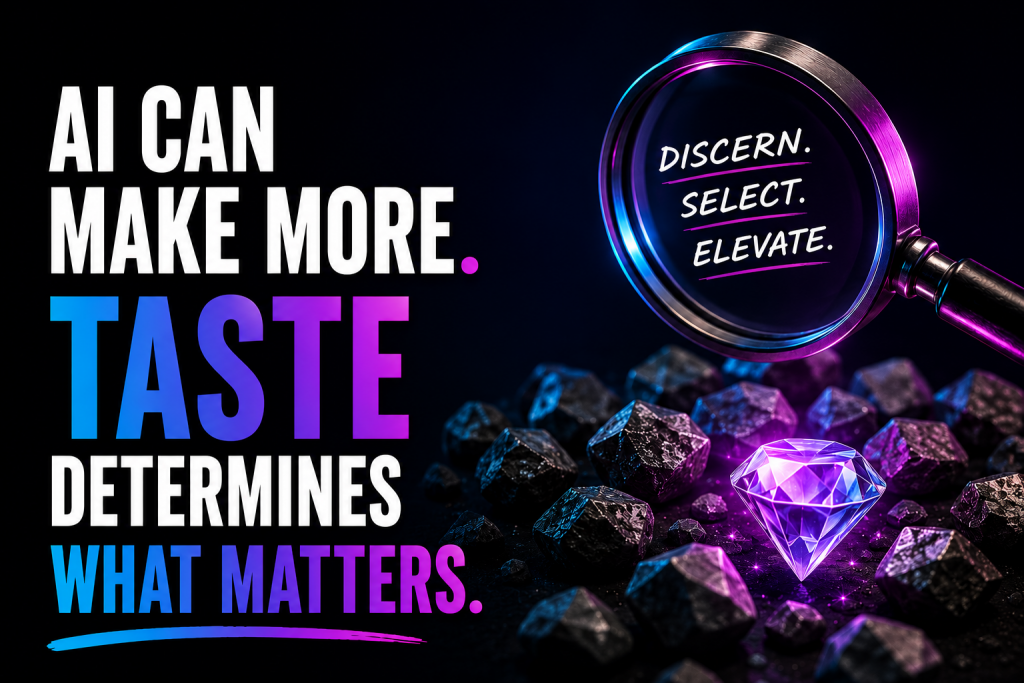
AI Can Generate. Taste Decides.
AI can give you twenty logo ideas.
Taste knows which one feels premium.
AI can draft an article.
Taste knows where it drags, where it sounds fake and where it lands.
AI can create a strategy deck.
Taste knows whether it is sharp insight or dressed-up clichés.
Discernment Is Becoming a Competitive Advantage
This matters across functions.
For marketers, taste shapes brand signal.
For leaders, taste shapes priorities.
For recruiters, taste shapes talent selection.
For product teams, taste shapes customer experience.
For creators, taste shapes what stands out.
The danger is assuming volume equals value.
Many professionals will generate more than ever and still become less relevant because they cannot distinguish average from excellent.
That gap creates opportunity for those who can.
Taste Is Built Through Repetition and Exposure
Taste is built, not gifted.
It grows through exposure to great work, honest feedback, pattern recognition and repeated editing. It comes from asking:
Why does this work?
Why does this fail?
Why does this feel cheap?
Why does this earn trust?
People who train those instincts will outperform people who simply generate faster.
This is especially true in hiring. As AI smooths rough edges and helps everyone appear more polished, employers will increasingly reward people who can make sound judgments about quality.
So what?
When content was scarce, production power mattered most.
When content is abundant, curation power wins.
AI can help you make more.
Taste determines whether more matters.
And, if you want to tell me what you think of this “So What,” email me at Wiseman@TalentintheAgeofAI.com.
Join Talent in the Age of AI today • Follow us on LinkedIn