
Translating AI news and trends into real implications for talent development leaders.
A very insightful 2-minute read!
Our job is to keep our finger on the pulse of what’s happening with Talent in the Age of AISM.
Here are some little “hits” of what I’ve been reading lately. To read even more and access FREE resources, see TalentintheAgeofAI.com.

Wendy Wiseman
There is an AI implementation lesson unfolding in real time that every leader should pay attention to.
You can have extraordinary technology.
You can have a bold strategy.
You can have executive commitment.
And still get the people part badly wrong.
Recent reporting about AI-driven workforce restructuring at Meta illustrates the danger. An aggressive attempt to reorganize work around AI agents reportedly ran into employee resistance, morale problems, workflow disruptions and weaker-than-expected productivity gains. The company subsequently shifted its public emphasis toward AI empowering people rather than simply replacing them.
Whatever ultimately happens there, the larger lesson is worth discussing:
People aren’t an implementation detail.
You Cannot Scare People Into Experimenting
Organizations want employees to experiment with AI.
Learn.
Take risks.
Redesign workflows.
Share what works.
Admit what doesn’t.
But consider the employee’s perspective.
If every conversation about AI begins with headcount reduction, what rational employee volunteers to show leadership exactly how their job can be automated?
You’ve created the wrong incentive.
People protect information.
They quietly resist.
They use AI privately rather than collaboratively.
They stop sharing efficiencies.
And leadership concludes that employees are “resistant to change.”
Maybe.
Or maybe they’re responding logically to the message they were given.
Trust Is Infrastructure
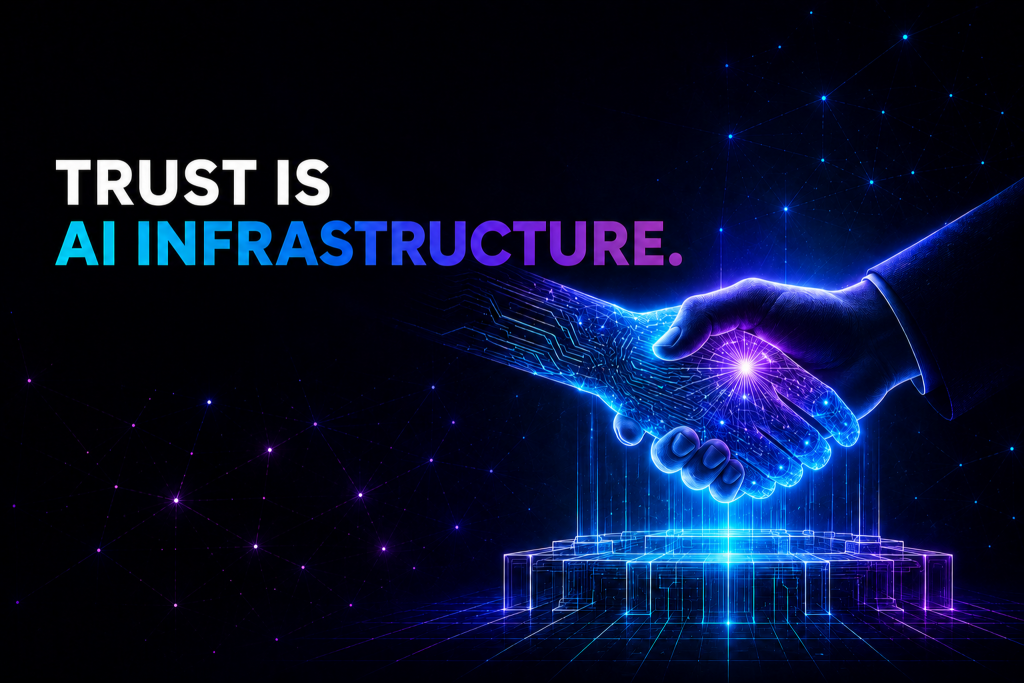
We’ve historically treated trust as a cultural nicety.
In an AI transformation, I think it becomes operational infrastructure.
People need to understand what the organization is trying to accomplish.
What will happen when productivity increases?
How will roles change?
What skills will become more valuable?
What happens to someone whose current tasks are automated?
What is leadership promising—and what isn’t it promising?
Leaders may not know every answer.
That’s okay.
Pretending certainty is worse.
People can handle ambiguity much better than they can handle spin.
Talent Leaders Have an Enormous Role Here
This cannot be an IT rollout with an HR communications plan attached at the end.
Talent leaders should be in the room when AI strategy is designed.
Because every automation decision eventually becomes a people decision.
It affects roles.
Performance expectations.
Career paths.
Learning.
Manager behavior.
Hiring.
Trust.
That’s the transformation.
The software is simply the catalyst.
So What?
If employees believe AI is being done to them, they will behave very differently than if they believe AI is being built with them.
That’s not softness.
That’s strategy.
The companies that figure this out will get something far more valuable than adoption.
They’ll get participation.
And in the age of AI, your people willingly helping redesign the organization may be one of the greatest competitive advantages you can have.
And, if you want to tell me what you think of this “So What,” email me at Wiseman@TalentintheAgeofAI.com.
Join Talent in the Age of AI today • Follow us on LinkedIn