
Translating AI news and trends into real implications for talent development leaders.
A very insightful 2-minute read!
Our job is to keep our finger on the pulse of what’s happening with Talent in the Age of AISM.
Here are some little “hits” of what I’ve been reading lately. To read even more and access FREE resources, see TalentintheAgeofAI.com.

Wendy Wiseman
Being smart used to carry more automatic value.
If you were analytical, informed, articulate, and capable of solving hard problems, people noticed. Organizations sought you out. Expertise signaled advantage.
Today, intelligence alone is less visible.
And in many settings, easier to ignore.
Why?
Because access to smart-sounding output has exploded.
AI can generate polished language, structured arguments, summaries, recommendations, frameworks, and explanations on demand. It can mimic competence convincingly enough that many people struggle to distinguish depth from surface fluency.
That changes the marketplace for attention.
Being smart is no longer enough.
You must be useful.
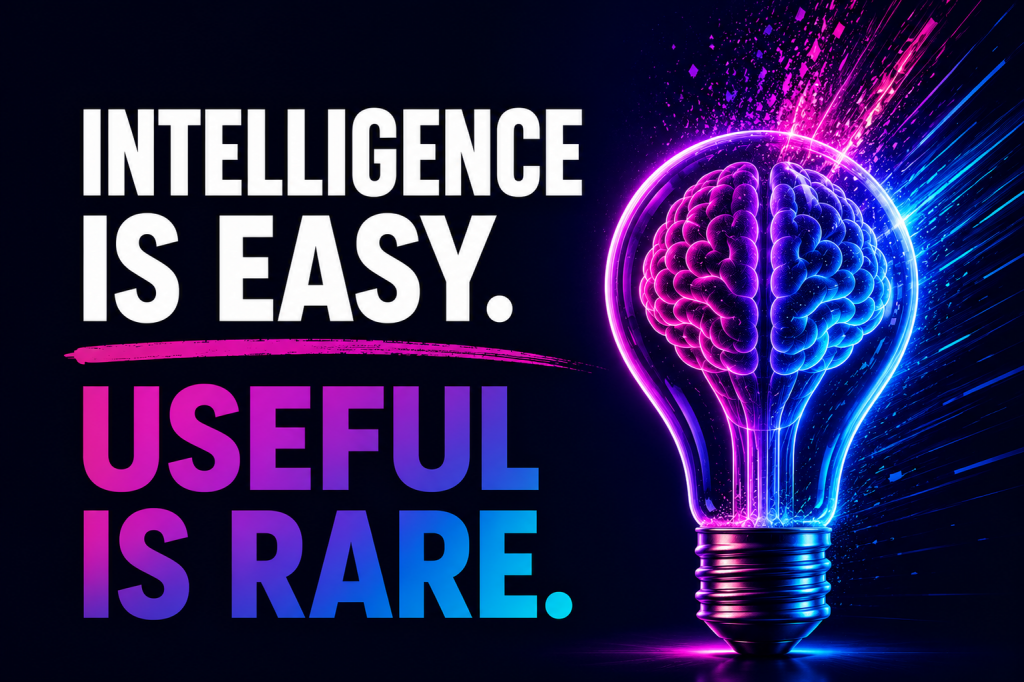
Useful intelligence looks different from performative intelligence.
It doesn’t just explain complexity. It reduces it.
It doesn’t just point out problems. It prioritizes solutions.
It doesn’t just sound impressive. It helps decisions move.
This is where many capable professionals get trapped.
They know a lot. They think deeply. They often have good instincts. But they communicate in ways that create admiration rather than action.
Long answers. Dense language. Perfect nuance. Endless caveats.
Meanwhile, someone less brilliant but more practical gains influence by saying:
- Here are the three options.
- Here is the tradeoff.
- Here is what matters now.
- Here is my recommendation.
- Here is how we execute this week.
That person often wins.
Not because they are smarter.
Because they are easier to use.
This is not an argument against expertise. Real expertise matters enormously. In fact, it matters more as noise increases.
But expertise must now travel well.
It must be translated into clarity, speed, judgment, and decisions others can act on.
Leaders should remember this when evaluating talent. The quiet operator who creates movement may be more valuable than the visible thinker who creates complexity.
Professionals should remember it too. If people routinely admire your intelligence but bypass your input, the issue may not be your capability.
It may be your packaging.
The market does not always reward raw ability directly. It rewards ability converted into value.
So what?
In an AI world, sounding smart is cheap.
Helping people win is expensive.
The smartest person in the room can still become irrelevant if nobody can use what they know.
And, if you want to tell me what you think of this “So What,” email me at Wiseman@TalentintheAgeofAI.com.
Join Talent in the Age of AI today • Follow us on LinkedIn